"ATLAS: Harmony in Diversity — The 60th Venice Biennale China National Pavilion Exhibition (Shanghai Stop)" Opens
日期:04-17-2026"ATLAS: Harmony in Diversity — The 60th Venice Biennale China National Pavilion Exhibition (Shanghai Stop)" Opens
No need to travel to Venice; the global feast of contemporary art—the China National Pavilion exhibition of the Venice Biennale—has arrived in Shanghai!"ATLAS: Harmony in Diversity — The 60th Venice Biennale China National Pavilion Exhibition (Shanghai Stop)" is open to the public free of charge at the World Expo Museum from March 31, with the exhibition period running through May 31, 2026.
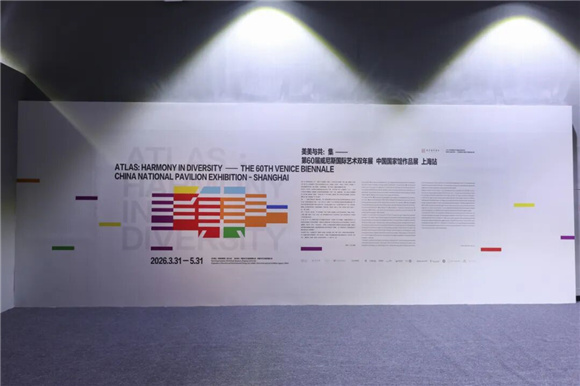
This exhibition is co-hosted by the World Expo Museum and Zhejiang University, and officially opened at the World Expo Museum on the afternoon of March 30. Distinguished guests attending the opening ceremony included: Wang Xiaosong, Professor and Doctoral Supervisor at the School of Art and Archaeology, Zhejiang University; Shen Yubing, Distinguished Professor and Chair of the Department of Art Philosophy, Fudan University; Ma Lin, Professor, Doctoral Supervisor at the Shanghai Academy of Fine Arts, Shanghai University, and Director of the Shanghai University Art Museum; Zhang Jianhua, General Manager of Shanghai West District Culture Media Development Co., Ltd. and Executive Director of the Hai Pai Art Museum; Wan Shuyuan, Professor and Doctoral Supervisor at the College of Humanities, Tongji University; Che Jianquan, Professor and Doctoral Supervisor at the Guangzhou Academy of Fine Arts; Zhang Lixing, Vice Chairman of the Shanghai Literary and Art Critics Association and Creative Planning Director of Wen Hui Bao; Cai Pengcheng, Founder of the Orsay Art Center; Wang Nanming, Artist, Critic, Independent Curator, and Founder of the Community Hub Station; Jiang Jun, Independent Curator and Art Critic; Fan Yong, Founder and Dean of the Asian Institute of Art Finance; Yu Ke, Professor at the Sichuan Fine Arts Institute, Member of the Curatorial Committee of the China Artists Association, and Director of the Institute of Art Sociology; Yang Kai, Founder of 99 Art and K Space; Chen Xiaojiao,"Hundred Talents Program" Research Fellow and Doctoral Supervisor at the School of Art and Archaeology, Zhejiang University; alongside World Expo Museum Director Liu Wentao, Deputy Director Zou Jun, and other guests, as well as student representatives from relevant art institutions.
Opening Guided Tour
During the opening event, Curator Wang Xiaosong, Co-curator Jiang Jun, and artist representative Che Jianquan jointly conducted an exhibition guided tour.
"ATLAS: Harmony in Diversity — The 60th Venice Biennale China National Pavilion Exhibition" aims to showcase the multi-dimensional expressions of contemporary Chinese art from the perspective of "convergence, exchange, and integration," while conveying the Chinese cultural values of "embracing diversity,""harmonious coexistence," and "harmony in diversity." The exhibition is divided into two sections:"ATLAS" and "TRANSMISSION."
The "ATLAS" section displays documentary archives of Chinese paintings currently housed in overseas collections. These works are all included in the "A Comprehensive Collection of Ancient Chinese Paintings" project. This project, spanning over 20 years, has gathered images of 12,405 pieces (sets) of precious ancient Chinese paintings, approximately one-quarter of which—over 3,000 pieces/sets—are currently held in countries and regions outside of China.
"ATLAS" originally symbolizes birds perched on treetops and can also refer to the elegant gatherings of literati."ATLAS" emphasizes integration, representing the convergence of diversity across the globe—different identities, races, beliefs, concepts, purposes, media, backgrounds, and cultures. It is an invitation, an act of absorption and acceptance, fostering dialogue, communication, and mutual understanding.
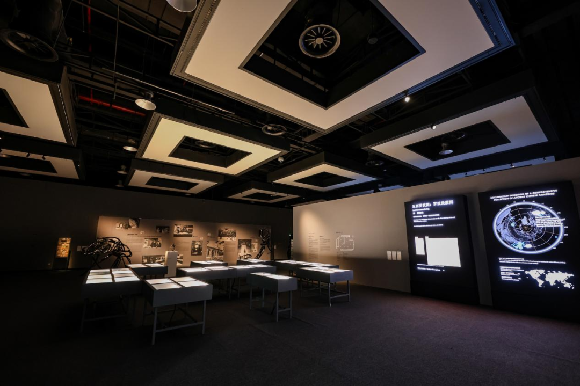
A Comprehensive Collection of Ancient Chinese Paintings
Compiled and published by Zhejiang University and the Zhejiang Provincial Administration of Cultural Heritage,"A Comprehensive Collection of Ancient Chinese Paintings"(hereinafter referred to as the "Comprehensive Collection") is, to date, the most complete and largest-scale image documentation of masterpieces of ancient Chinese painting from around the world. It comprises five major dynastic collections: A Collection of Pre-Qin Period to Tang Dynasties Paintings, A Collection of Song Dynasty Paintings,A Collection of Yuan Dynasty Paintings, A Collection of Ming Dynasty Paintings, andA Collection of Qing Dynasty Paintings, totaling 67 volumes across 248 books. It includes 12,405 pieces (sets) of ancient Chinese paintings on paper, silk (including satin,brocade), linen, and other materials from 263 cultural institutions and museums worldwide, covering the vast majority of surviving "national treasure" level masterpieces.
This exhibition features selected overseas-collected paintings, such as Night-Shining White by Han Gan (Tang Dynasty),Stream Bank by Dong Yuan (Five Dynasties), Old Trees, Level Distanceby Guo Xi (Song Dynasty),Woods and Valleys of Mount Yu by Ni Zan (Yuan Dynasty), Clearing Autumn Mist over River and Mountains by Dong Qichang (Ming Dynasty), and Enjoying the Summer in the Thatched Cottage at Mo jing by Wu Li (Qing Dynasty). These works are presented through data visualization to uncover their provenance and history, using images as historical evidence.
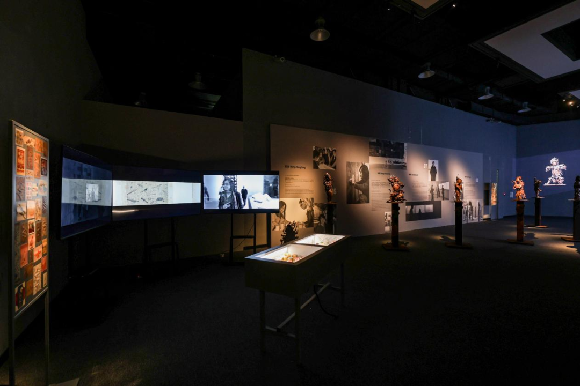
The archive display area is located at the exhibition entrance, consisting of display cases and large digital screens. The display cases present the published pages of the overseas-collected paintings, with the archival documents detailing the existing research and the circulation history of each specific artwork. The large digital screens utilize data visualization to illustrate the provenance journey, artist schools, and other relevant information regarding the selected paintings.
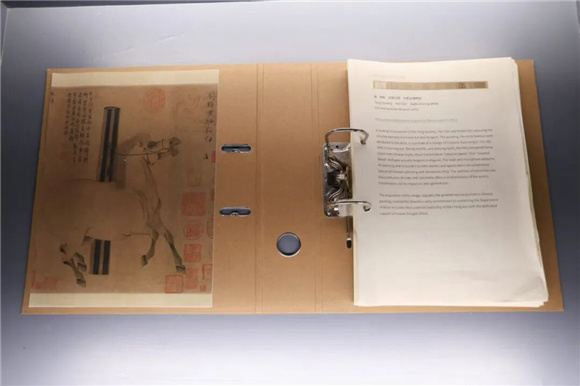
Documentary Archives of "A Comprehensive Collection of Ancient Chinese Paintings"
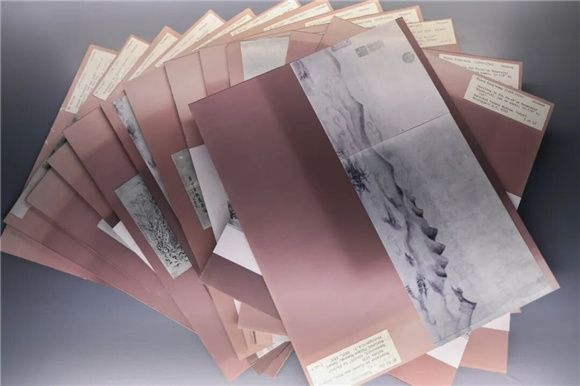
Wen Fong Teaching Collection, Zhejiang University Library
In the "TRANSMISSION" section, seven contemporary Chinese artists have created new works inspired by the "Comprehensive Collection." Engaging with various painting elements such as architecture, landscape, figures, and birds-and-flowers, they "befriend the past through art" and "innovate upon antiquity." This reflects the traditional Chinese literati culture of the Yaji (gathering) while emphasizing the "transmission" and continuity between tradition and the contemporary era.
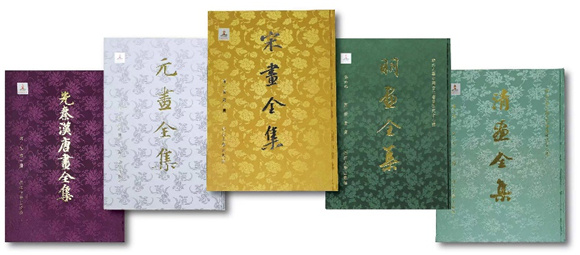
“A Comprehensive Collection of Ancient Chinese Paintings” Project Team
Founded in 2005 in Hangzhou, Zhejiang, China
Currently works in Hangzhou
"A Comprehensive Collection of Ancient Chinese Paintings", compiled and published by Zhejiang University Press and the Zhejiang Provincial Administration of Cultural Heritage, is by far the world's most comprehensive collection of Chinese paintings dating to China's premodern period. A total of 248 books and sixty-seven volumes, making up "A Collection of Pre-Qin Period to Tang Dynasties Paintings","A Collection of Song Dynasty Paintings","A Collection of Yuan Dynasty Paintings","A Collection of Ming Dynasty Paintings", and "A Collection of Qing Dynasty Paintings", cover a sum of more than 12,000 works (sets) of Chinese paintings on paper, silk, linen, and other materials from 263 museums and other cultural institutions worldwide, of which there are 9,000 sets in 122 domestic collections and 3,000 sets in 141 overseas collections, representing a large percentage of extant national treasures. Historically, the compilation and systematic recording of such a comprehensive collection of ancient paintings remains unprecedented. Moreover, this project's publication and dissemination of these works using the highest-definition printing technology offers a unique opportunity for this collection of artistic heritage to be shared and utilized by the greater world.
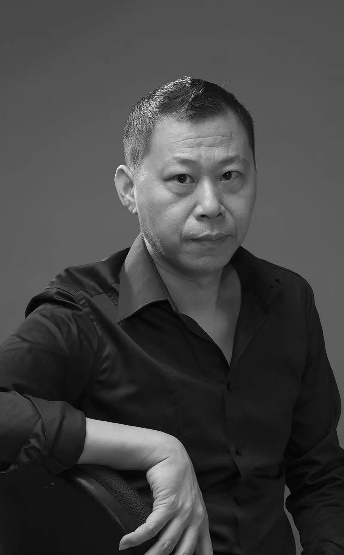
Che Jianquan
Born in 1967 in Tianjin, China
Currently lives and works in Guangzhou, China
Che Jianquan, Professor and doctoral supervisor at the Guangzhou Academy of Fine Arts, visiting professor at the Sichuan Fine Arts Institute, and master's supervisor at the Tianjin Academy of Fine Arts. Che Jianquan is a cross-disciplinary artist whose research spans natural history, history, sociology, regional culture, and image studies. His artistic mediums include painting, video, writing, and interactive installations. Starting from specific field studies, he employs an intertextual approach to weave through the uniqueness of different domains, constructing a contemplative style of expression that reveals the impact of natural energy and mystique on human spectacle. Rooted in the spirit of traditional Chinese philosophy, he emphasizes the integrative relationship between humans and the natural world, rethinking how ancient wisdom can address contemporary issues and crises.
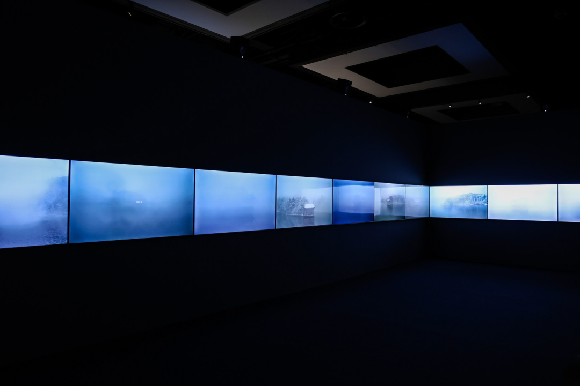
Pavilions
Che Jianquan
2003-2022
Video
Variable dimensions
Pavilions are a classic form of traditional Chinese garden architecture, offering dual perspectives of viewing from inside out and outside in due to their open structure. Since 2003, Che Jianquan has chosen a lakeside pavilion as his subject, spending 20 years continuously capturing the same scene through the seasons from a fixed perspective, creating the Pavilion series consisting of 20-image works. With seasonal weather changes, Pavilion also symbolizes the visualization of traditional Chinese culture.
A series of images depicting pavilions and waterscapes, both Chinese and foreign, are collaged onto display panels, offering viewers supplementary visual references.
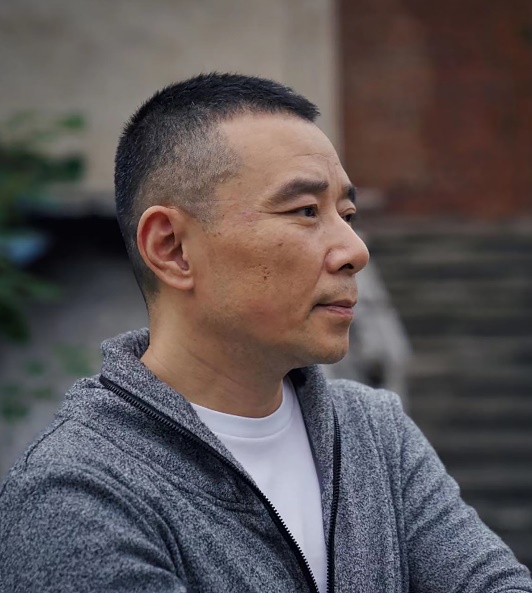
Jiao Xingtao,
Born in 1970 in Chengdu, China
Currently lives and works in Chongqing, China
Jiao Xingtao, Sculptor, President of the Sichuan Academy of Fine Arts. Graduating with a master’s degree from Sichuan Fine Arts Institute in 1996, he has dedicated himself to contemporary sculpture, public art practice, and theoretical research. His early welded metal works employed deliberately ornate modernist sculptural language to achieve contemporary expressions of traditional cultural symbols, revealing the tension and dialogue between classical art and modern China. His emphasis on a new sculptural concept—where artistic creation engages with social practice—has remained a consistent thread throughout his career to this day.
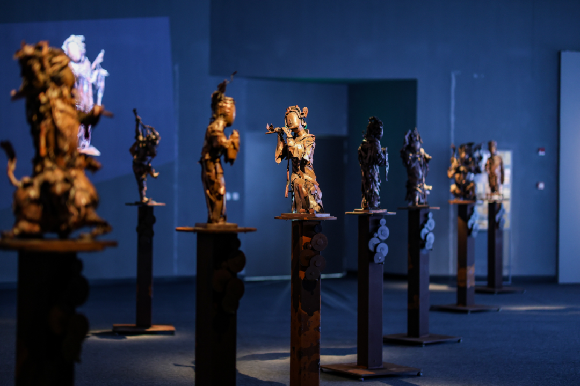
Soul·Rhyme
Jiao Xingtao
2022
Installation (Metal)
Multiple dimensions
In traditional Chinese painting, figures are presented with lines and gradations, distinctly different from the voluminous, lifelike figures in Western painting. However, in this work, Jiao Xingtao uses leftover copper strips and sheets from metalworking factories, welding them directly to represent these figures. To his surprise, they appear strikingly similar. These metal sculptures, bearing the style of the pre-industrial era, exude a nostalgic charm that fascinates the artist, showcasing the fusion and conflict between cultural tradition and contemporary life. Additionally, Jiao Xingtao has photographed these sculptures and, with the support of AI technology, generated ever-changing, unending dynamic images and figures.
A series of images of figures, both Chinese and foreign, are collaged onto display panels, offering viewers supplementary visual references.
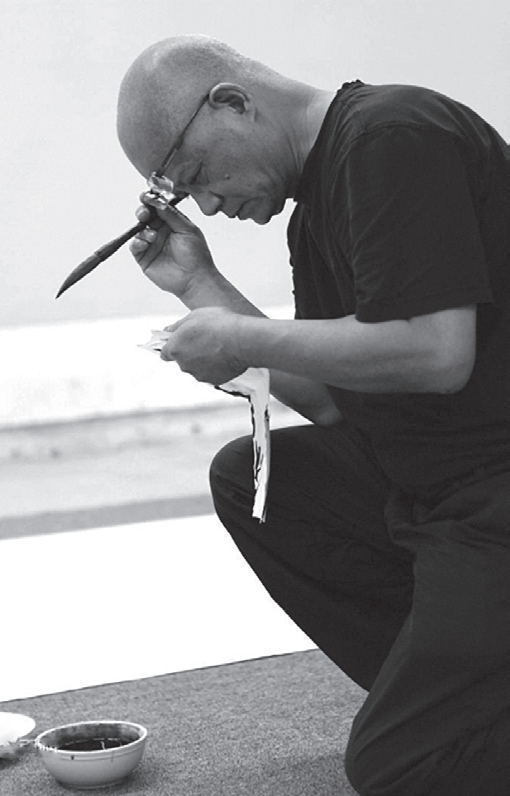
Qiu Zhenzhong
Born in 1947 in Nanchang, Jiangxi, China
Currently lives and works in Beijing, China
Qiu Zhenzhong, Professor at the Central Academy of Fine Arts, director of the Center for Comparative Studies of Calligraphy and Painting.
Qiu Zhenzhong has a profound understanding of Chinese calligraphy and demonstrates exceptional mastery of the art form. His research in Chinese calligraphy has had a significant influence across Asia. He is dedicated to drawing on the sensitivity gained from calligraphy and combining it with insights into contemporary art to create works that are deeply rooted in Chinese culture yet distinct from both traditional calligraphy and abstract painting, expanding the expressive possibilities of writing and spatial composition in contemporary art. His work encompasses diverse forms including text-based pieces, ink paintings, installations, and sculptures.
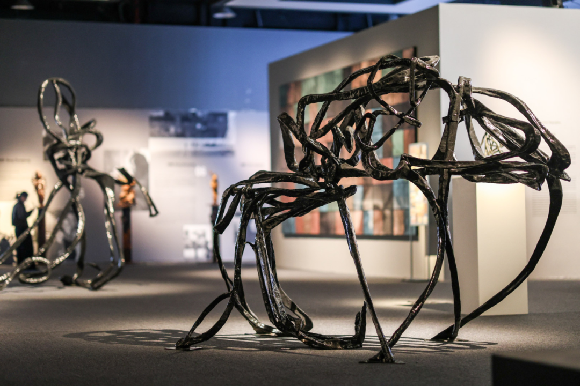
Status Series
Qiu Zhenzhong
2024
Sculpture (Steel skeleton, Colored Fiberglass)
Multiple dimensions
Two sculptures titled Status by Qiu Zhenzhong are scattered inside the exhibition hall, with "landscaping" as the focal point. These 3D works materialize the abstractness of Chinese calligraphy, serving as a reinterpretation of the artificial mountains and peculiar pines found in traditional Chinese painting. In the outdoor space of the China Pavilion, they construct a new "garden" through which people and birds can pass, simulating a vision of harmonious coexistence with nature aspired by many. This emphasizes the value of seeking harmonious symbiosis between nature and art.
A series of image documents of Chinese and foreign garden landscapes are collaged onto display panels, offering viewers supplementary visual references.
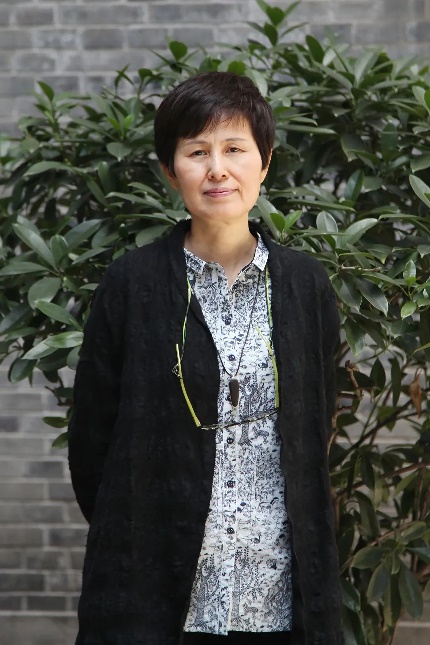
Shi Hui
Born in 1955 in Shanghai, China
Currently lives and works in Hangzhou, China
Professor and doctoral supervisor at the China Academy of Art and founder of the Hangzhou Triennial of Fiber Art.
Shi Hui graduated from Zhejiang Academy of Fine Arts (now China Academy of Art) in 1982 and began contemporary artistic creation in 1986. Her works are characterized by the use of cotton, hemp, rice paper, pulp and other fiber materials. Through her creative framework grounded in contemporary art sensibilities and her sensitivity to and mastery of materials, her artistic practice has become increasingly refined and mature. Within the landscape of Chinese contemporary art, Shi Hui's works display distinctive visual qualities. She extends traditional weaving techniques into spatial constructions and transforms the weaving process into an experiential journey, creating a means of visual interpretation that reflects the cultural heritage of Eastern spirituality within contemporary art.
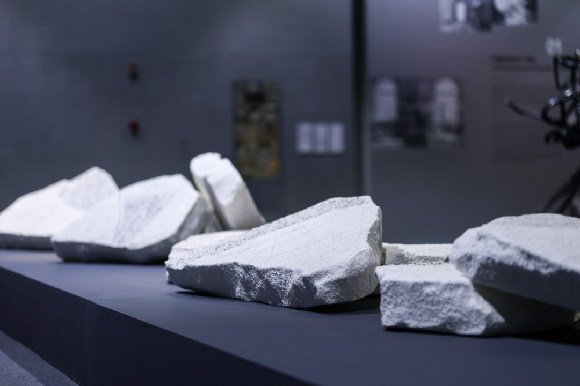
Writing-Non-Writing Series: Contemplation
Shi Hui
2021
Installation (Xuan paper, paper pulp, mixed media)
1050cmx200cmx100cm
Writing-Non-Writing Series: Contemplation originates from the image of the stele in Reading the Stele by Pitted Rock,"Reading steles" is a classical theme in Chinese cultural history, through which scholars express their thoughtful reflection on history. This work begins with traditional Chinese materials, creating a contemporary painting installation through fiber weaving techniques incorporating the artist's own historical contemplation into the installation. In today's context, the artist revisits the question of "how we think about history and how we confront history." As viewers walk around the installation and pause to contemplate it, they connect across time and space with the mindset of ancient Chinese literati reading steles.
A series of image documents of Chinese and foreign texts are collaged onto display panels, offering viewers supplementary references.
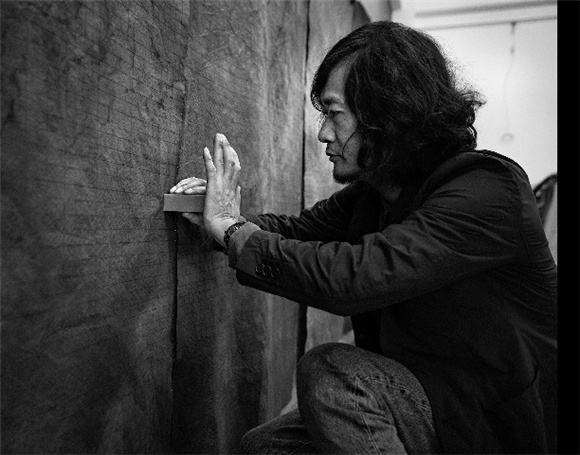
Wang Shaoqiang
Born in 1969 in Shantou, Guangdong, China
Currently lives and works in Guangzhou, China
Wang Shaoqiang, Director of Guangdong Museum of Art, holding a professorship and senior research position (Level II) in cultural heritage studies, as well as serving as a doctoral supervisor. He is a recipient of the State Council Special Allowance for outstanding contributions. Concurrently, he holds appointments as a professor and doctoral supervisor at the Chinese National Academy of Arts, a council member of the China Artists Association, President of the Guangdong Association of Art Museums, and Vice Chairman of the Guangdong Artists Association.
Wang is dedicated to extensive research in Eastern philosophy and views of nature, with a focus on the contemporary reinterpretation of traditional Chinese cultural heritage. He continually seeks conceptual and methodological breakthroughs in his work. Drawing from his deep understanding of both Eastern and Western art history and keen observations of the current artistic landscape, he strives to bridge classical and contemporary approaches across Eastern and Western traditions. By integrating contemporary modes of thinking and creative vision into the reconstruction of traditional cultural contexts, he thereby reshapes artistic paradigms. His reverence for and technical mastery of Chinese ink and paper-based mediums allow him to infuse personal expression into his artistic practice, cultivating a distinctive visual language, modern perspective, and unique artistic approach.
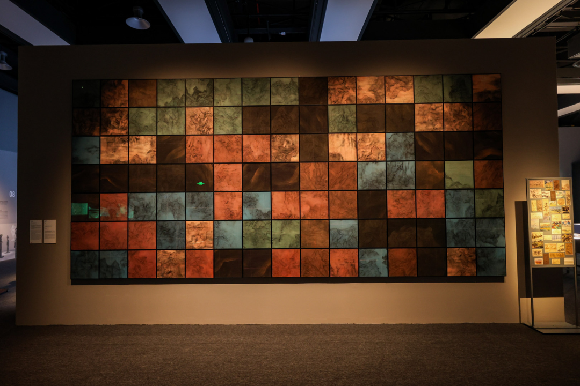
Heritage Reimagined
Wang Shaoqiang
2024
Ink on paper
400mm×400mm×105
Wang Shaoqiang's work Heritage Reimagined draws its inspiration from Song Dynasty paintings, absorbing the essence of Song Painting styles from renowned artists such as Dong Yuan, Fan Kuan, Xia Gui, Guo Xi, and Ma Yuan, to explore the contemporary transformation of traditional paintings. This work adopts the medium of traditional Chinese painting and expresses the spiritual connotation of Song paintings and contemporary aesthetic characteristics in a unique creative way.
A series of image documents of painting brushstrokes in Chinese and foreign works are collaged onto display panels, offering viewers supplementary visual references.
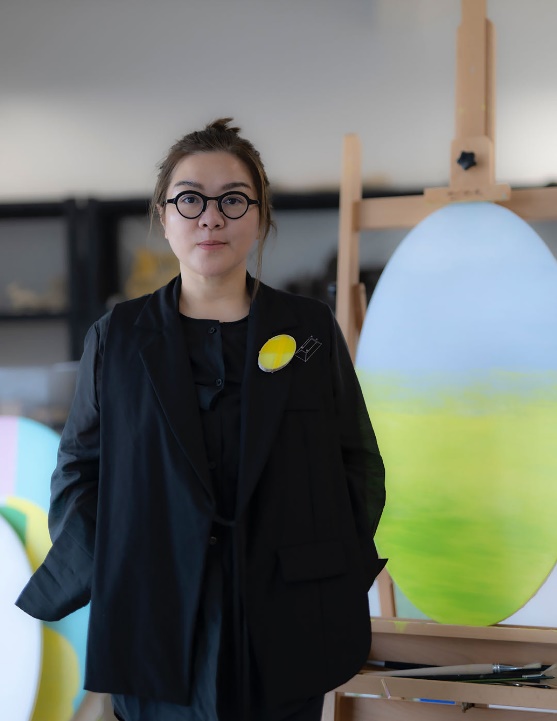
Wang Zhenghong
Born in 1973 in Shanghai, China
Currently resides and works in Hangzhou, Zhejiang, China
Wang Zhenghong, professor and doctoral supervisor at the China Academy of Art. As an artist with expertise in both sculpture and jewelry art, she works to bridge these two disciplines, creating wearable sculptures. Her artistic practice merges Eastern traditional formal language with Western contemporary aesthetic characteristics, with a focus on “bodily perception”.
Symphony of Birds
Wang Zhenghong
2023
Installation (Metal, Jade, Wood)
Multiple dimensions
Performance ©?Ma Yiao
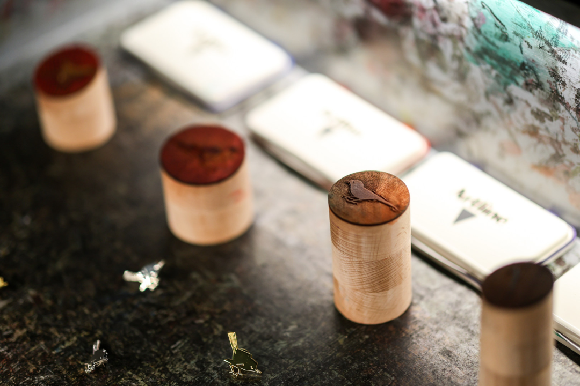
Wang Zhenghong's performance art piece Symphony of Birds draws its concept from The Sketching of Rare Birds and various bird species from A Comprehensive Collection of Ancient Chinese Paintings. Through conceptual and performance art, the artist orchestrates performers wearing bird-shaped ornaments to traverse indoor and outdoor spaces (gardens), evoking the imagery of a multitude of birds congregating. Additionally, audiences, with the help of staff, can either take away miniature bird sculptures or imprint bird-shaped emblems onto their exposed skin, moving through the space as if birds fluttering through the air. The wearable miniature bird sculptures and emblems are displayed in a documentation cabinet for audience viewing, while a series of bird depictions from both Chinese and Western paintings are collaged onto display panels providing viewers with supplementary visual references.
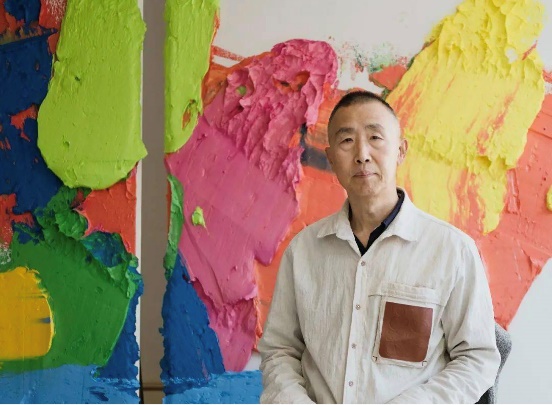
Zhu Jinshi
Born in 1954 in Beijing, China
Currently lives and works in Beijing, China
Zhu Jinshi is one of the earliest practitioners of abstract and installation art in China. He began creating abstract paintings in the early 1980s. After moving to Berlin in 1986, he shifted towards experimental art forms including performance, text, and installation. Since 1994, Zhu Jinshi has been a dynamic presence in the art world, frequently traveling between Berlin and Beijing and participating in numerous prestigious exhibitions both in China and abroad. His international recognition is largely attributed to his remarkable use of materials such as rice paper and bamboo in his installation works. Through his artistic journey spanning over four decades, Zhu's evolution from abstract painting to installation art is noteworthy. This transition not only marked the independence of his installation art from traditional painting but also redefined it, offering a new dimension to his artistic expression. It is through the interplay of these two art forms that the profound aesthetic value of Zhu's work becomes palpably evident, showcasing his unique contribution to the contemporary art scene. Zhu Jinshi's creations exhibit a strong vitality and expansiveness—qualities that endure in his current work. His creations transcend the boundaries of any specific artistic medium or era, as well as geographical and East-West identity differences. Instead, he adopts a macroscopic perspective to outline his personal artistic evolution against the backdrop of contemporary global culture.
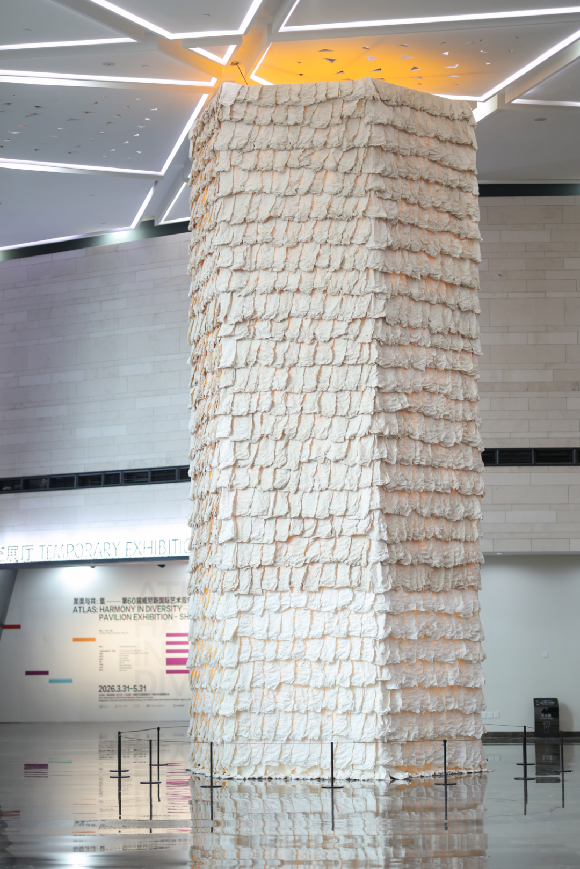
Rice Paper Pagoda
Zhu Jinshi
2024
Installation (Fireproof rice paper, steel pipe, Cotton thread, Bamboo Pole, LED light)
8500–8700 mm×3500mm
Rice Paper Pagoda is composed of thousands of sheets of rice paper, cotton threads, bamboo poles, and other environmentally friendly materials, forming a large indoor tower-like installation adorned with built-in lighting. The inspiration for this work comes from the architectural imagery of pagodas in Chinese painting. As a structure that embodies spirituality, the pagoda integrates multiple cultural symbols. Zhu Jinshi's work employs an abstract depiction of the tower, echoing not only Chinese pagodas but also reflecting the image of towers from various countries in a cross-cultural and cross-historical context.
A series of image documents of towers from both China and abroad are collaged onto display panels, offering viewers supplementary visual references.
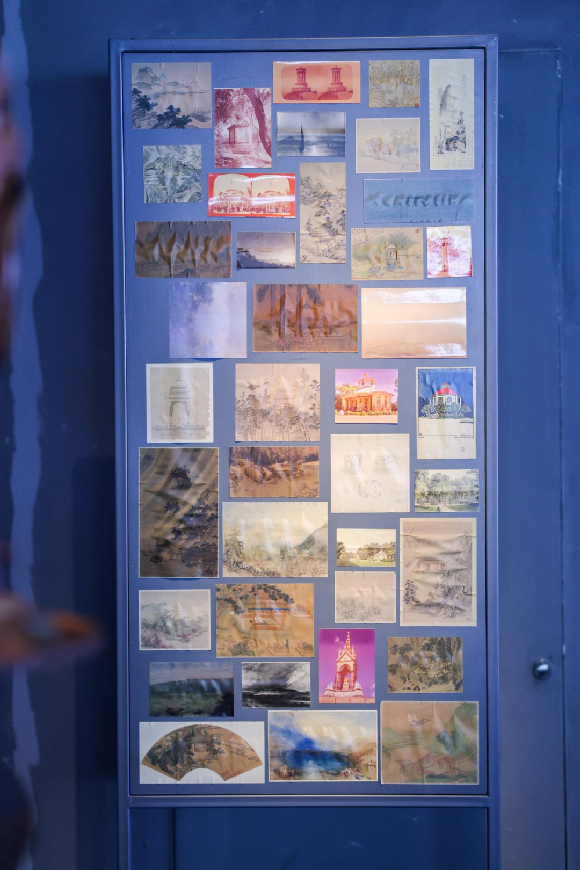
Through the image display walls, the curatorial team fosters a dialogue and interplay between ancient and contemporary art, as well as between Chinese and international cultures. This dialogue addresses crucial questions—from historical context, contemporary realities, to future trajectories—regarding how Chinese art engages with the global stage and constructs its own narrative within cross-cultural exchanges. The exhibition thus becomes both a site of practical significance and a space imbued with rich symbolism.
Curator: Wang Xiaosong
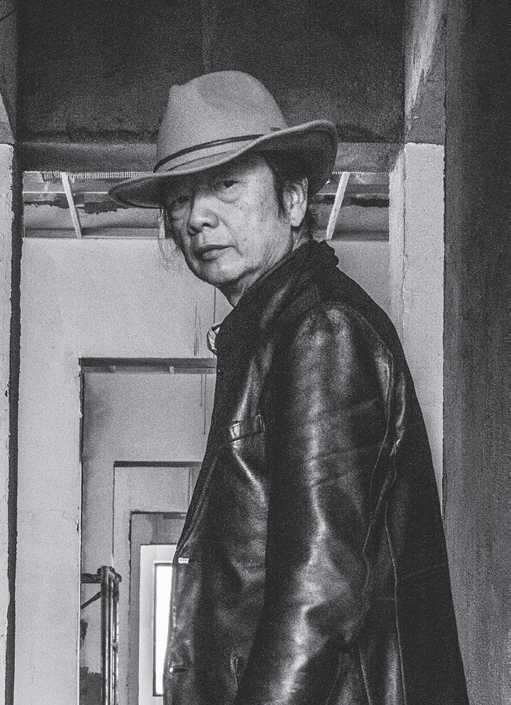
Born in 1964 in Wuhan, China. Currently lives and works in Hangzhou, China.
Artist and Curator. Professor and Doctoral Supervisor at the School of Art and Archaeology, Zhejiang University; Member of the National Steering Committee for Professional Degree Graduate Education in Design; Director of the Institute of Contemporary Art and Design, Zhejiang University. Graduated from the Central Academy of Arts and Crafts (now the Academy of Arts & Design, Tsinghua University) and the Berlin University of the Arts, Germany. Chief Expert of major projects funded by the National Social Science Fund of China.
He has long been engaged in artistic creation and curatorial practice, having held solo exhibitions at institutions including the Ludwig Museum Koblenz, Germany; St. Anne's Museum, Lübeck, Germany; Palazzo Medici Riccardi, Italy; Künstlerhaus Wien, Austria; and the Shanghai Duolun Museum of Modern Art. His works have been featured in exhibitions such as the Beijing International Art Biennale, Chengdu Biennale, Wuhan Biennale, the Northern German International Art Festival, Venice Biennale collateral events, and the Guangzhou Triennial.
His major curatorial experiences include serving as the Chief Curator of the touring exhibition for "A Comprehensive Collection of Ancient Chinese Paintings" and Curator of the China National Pavilion "ATLAS: Harmony in Diversity" at the 60th Venice Biennale.
Co-curator: Jiang Jun
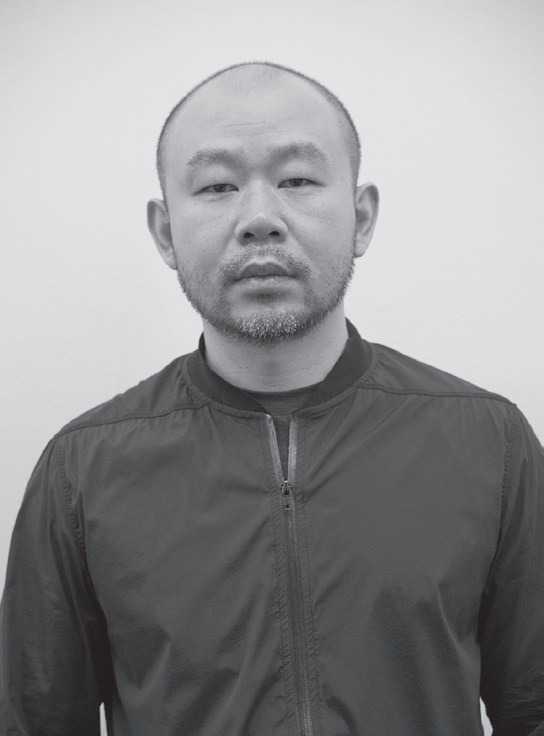
Born in 1982 in Shanghai, China. Currently lives and works in Shanghai and Hangzhou, China.
Independent Curator, Art Critic. Guest Curator at Shenzhen Museum of Contemporary Art and Urban Planning. Chairman of the Art Economy Professional Committee of the Zhejiang Creative Design Association. He graduated from the Kunstakademie Münster, Germany, and later received his Ph.D. in Art Studies from the China Academy of Art. From 2021 to 2024, he conducted postdoctoral research in Architecture at Tongji University, Shanghai. Jiang Jun was the Co-curator of the China National Pavilion "ATLAS: Harmony in Diversity" at the 60th Venice Biennale (2024), co-curated "Symphony of All the Changes: The 7th Guangzhou Triennial"(2022-2023), and "Time Gravity — 2023 Chengdu Biennale."
Opening Symposium
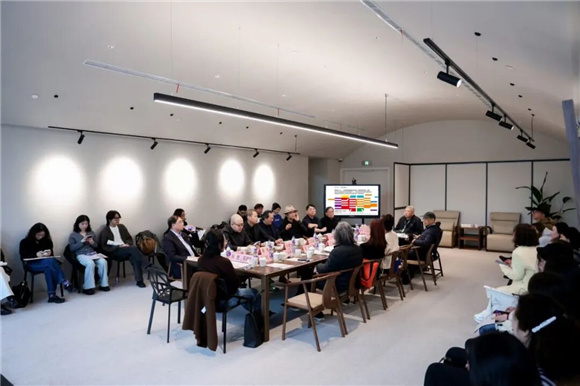
Following the guided tour, Professor Wang Xiaosong presided over the exhibition opening symposium. Participating guests engaged in in-depth discussions on topics including "The Journey of Chinese Contemporary Art at the Venice Biennale,""Cultural Self-Improvement and Cultural Confidence," and "How to Construct Contemporary Art Works with an International Vision." The dialogue addressed crucial questions—from historical lineage, contemporary context, to future pathways—regarding how Chinese art faces the world and establishes its own narrative within global exchanges. This made the exhibition both a site of practical relevance and symbolic cultural significance.
Exhibition Information
ATLAS: Harmony in Diversity — The 60th Venice Biennale China National Pavilion Exhibition (Shanghai Stop)
Exhibition Dates: March 31, 2026, to May 31, 2026
Venue: Temporary Exhibition Hall 2, World Expo Museum
Host Organizers: World Expo Museum, Zhejiang University
Co-organizers: China Arts and Entertainment Group Ltd.(CAEG), China International Exhibition Agency (CIEA)