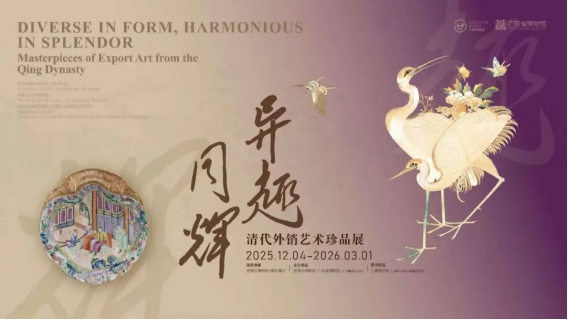
Unlocking the Code of Centuries-Old Trade Culture|"Diverse in Form, Harmonious in Splendor” Materpieces of Chinese Export Art from the Qing Dynasty Opens
日期:01-13-2026Co-organized by the World Expo Museum and the Guangdong Museum, the exhibition "Diverse in Form, Harmonious in Splendor: Materpieces of Chinese Export Art from the Qing Dynasty " officially opened to the public on December 4, 2025.
Using artifacts as a medium, the exhibition brings together 119 exquisite pieces (sets) of Qing Dynasty export art from the collection of the Guangdong Museum. Spanning nine categories—embroidery, Canton famille rose porcelain, Canton carving, export painting, export enamelware, export silverwares, export lacquerware, export fans, and business card boxes—the exhibition offers a panoramic view of the cultural collision and fusion in Sino-Western trade from the 18th to the 19th century. It vividly showcases the unique charm of Chinese craftsmanship as it embraced and reinterpreted Western aesthetics.
01 Three Core Highlights Unlocking the Unique Allure of Qing Dynasty Export Art
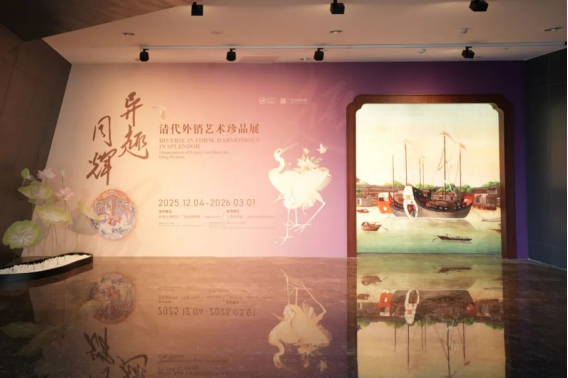
Nine categories presented in panorama, epitomizing the fusion of Chinese and Western craftsmanship.
The exhibition systematically outlines the development of Qing Dynasty export art, with the nine categories of treasures each showcasing distinct characteristics and complementing one another harmoniously.
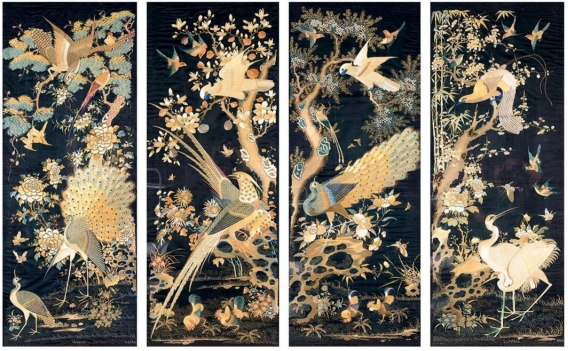
Embroidery absorbed the chiaroscuro and perspective principles of Western oil painting. White Satin Canton Embroidery Screen with the Design of Peacock, Birds and Flowers is fully embroidered with multicolored silk threads, showcasingmeticulous craftsmanship and vivid, lifelike details.
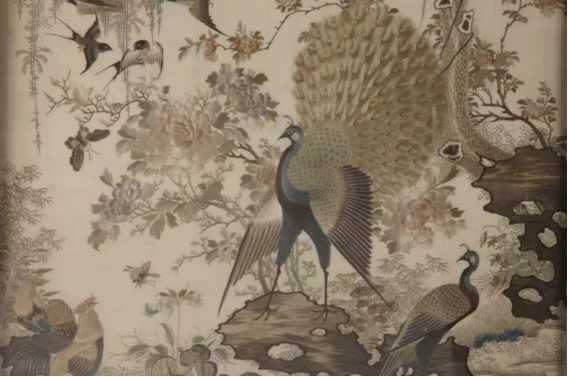
White Satin Canton Embroidery Screen with the Design of Peacock, Birds and Flowers(Detail)
Canton Porcelain combines Jingdezhen white porcelain with Western aesthetics. Pieces such as the Kwon-glazed Plate with the Badge Pattern of Earl Ross and the Kwon-glazed Porcelain Plate with the Design of the Judgement of Paris retain traditional Chinese painting techniques while incorporating European motifs like family crests and mythological stories, serving as vivid testimonies to Sino-Western cultural exchange.
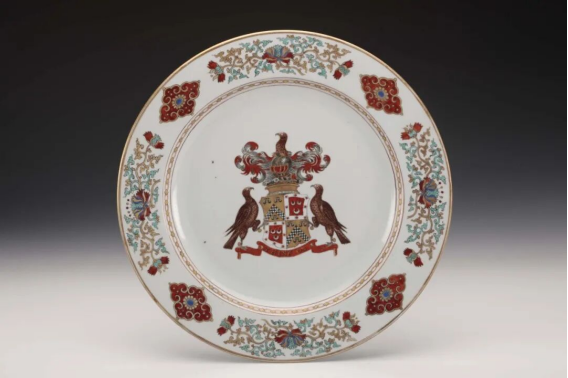
Kwon-glazed Plate with the Badge Pattern of Earl Ross
Canton Carving uses precious materials such as ivory and tortoiseshell as its medium. Works like the Ivory Sewing Box in Openwork and the Shell Carving Pendant with the Design of Christ’s Life Story the exquisite fusion of Eastern and Western motifs through meticulous openwork and fine detailing.
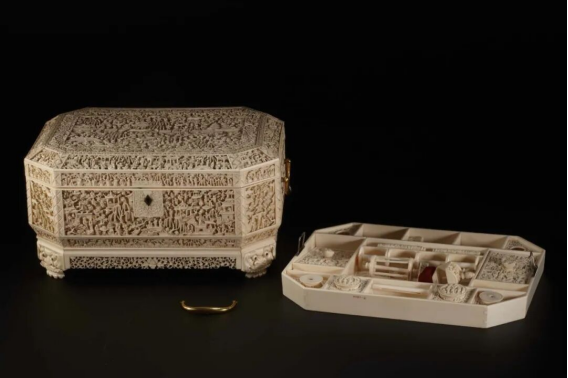
Ivory Sewing Box in Openwork
Additionally, export paintings depicting the Thirteen Hongs, exquisitely crafted export silverware, export fans popular in Europe and America, and calling card cases combining multiple crafts, collectively showcase the unique style of Qing Dynasty export art characterized by "East-West fusion and harmonious diversity."
Legends Behind the Treasures: Reviving the Glory of a Global Trade Hub
This exhibition is not only a visual feast but also a dialogue across civilizations through time and space. Each artifact serves as a microcosm of trade history, carrying the memory of the Lingnan region as a global commercial hub.
Among the exhibits, the *Manuscript of American Factories and Figures by George Chinnery* from the 18th century captures the bustling scene of Guangzhou's trading districts and the vibrancy of Sino-foreign commerce through vivid sketches. The *Silver-bodied Pot with the Badge Pattern and Signature of WH*, bearing the "WH" hallmark, attests to the commercial legacy of Hongxing, a leading export silverware giant in the late Qing era. Meanwhile, the French inscription "Nous Ne Changeons Jamais" on the *Blue-and-white Kwon-glazed Cup and Dish with the Badge Pattern* recounts the transoceanic bond forged when European nobility commissioned Chinese porcelain.
Through these treasures, visitors can vividly experience the heyday when, following the implementation of the "Single Port Trade Policy" in the 22nd year of Emperor Qianlong's reign, the Thirteen Hongs in Guangdong monopolized Sino-Western maritime trade and became the central hub for the production and distribution of Chinese export art. They can relive the commercial prosperity of the Maritime Silk Road and appreciate the grand and dynamic history of East-West exchange.
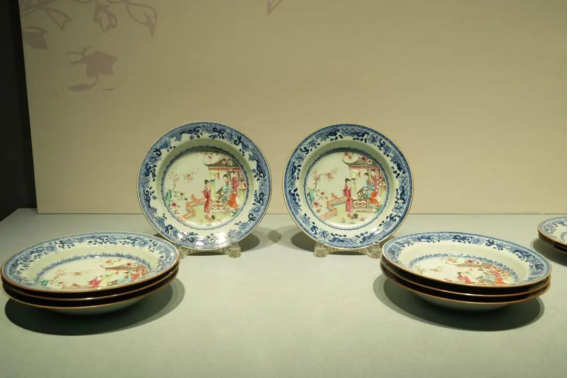
Blue-and-white Glazed Banquet Tableware with the Design of Figures
A Shared Cultural Heritage Between Guangdong and Shanghai: A Dialogue Across Time Inspiring Mutual Learning Among Civilizations
Within the exhibition, a precious collection of "Bund imagery" stands out as one of the most narrative-rich highlights.
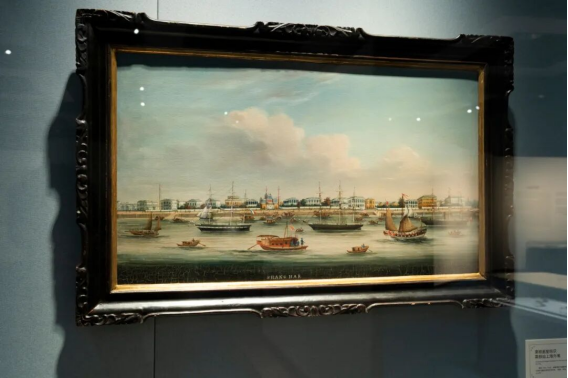
Landscape of Shanghai with Signature of the Studio by Nan Ting
A 19th-century export painting attributed to the renowned Guangzhou export painter Nan Ting's studio depicts the early scenery of the Shanghai Bund shortly after the port was opened to foreign trade.
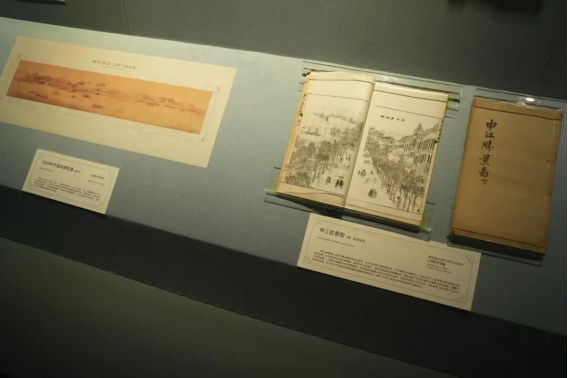
Another piece, collected by the Shanghai Library, is from the 1884 illustrated album *Famous Sights of Shanghai* by Wu Youru. It captures the Western-style buildings along the Bund, bustling river traffic, and vibrant street scenes through delicate line drawing techniques.
Similarly, from the Shanghai Library's collection, an excerpt from the book *Shanghai (1843–1893): The Birth, Growth, and Celebration of a Model Settlement* features a visual depiction of the Bund, showcasing an oil painting created around 1850 by an export painter.
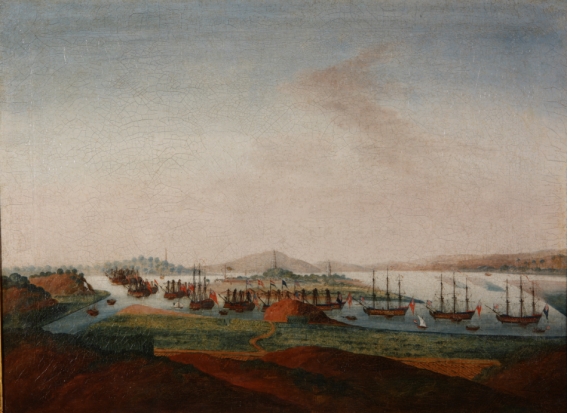
The Anchorage of Whampoa
A series of "Bund imagery" from diverse sources reconstructs the early landscape of the Shanghai Bund following the port's opening. The original layout of the riverbank, the nascent architectural forms of the newly established concessions, and the traditional vessels navigating the river collectively represent an early artistic portrayal of modern Shanghai's portscape.
From the trading houses along the Pearl River to the Bund on the Huangpu River, the image of China's treaty ports was shaped and conveyed to the West through these export artworks, constructing a visual understanding of the East. In this way, the exhibition deftly interweaves the historical continuity and resonance between Guangdong and Shanghai in the narrative of Sino-foreign trade.
02 Collaborative Inter-Museum Efforts with Far-Reaching Significance: Composing a New Chapter in Cultural Exchange
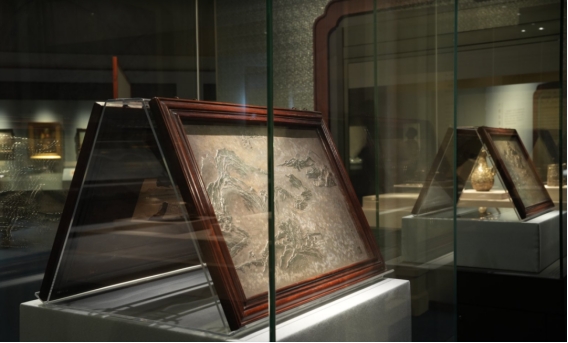
The collaboration between the World Expo Museum and the Guangdong Museum stems from their shared commitment to preserving and promoting the legacy of cultural exchanges between China and the rest of the world. As one of China's leading institutions with the most comprehensive and exquisite collection of export art, the Guangdong Museum has long been dedicated to the acquisition, conservation, and research of such cultural relics. Meanwhile, the World Expo Museum, with its mission to uphold the spirit of World Expos and foster cross-cultural dialogue, serves as a vital platform for showcasing and facilitating exchanges between Chinese and global cultures. This partnership is a vivid example of the two museums leveraging their respective strengths—not only to systematically present and highlight Qing Dynasty export art but also to delve deeply into the intertwined commercial and cultural heritage of Guangdong and Shanghai.
The exhibition not only offers visitors the rare opportunity to appreciate over a hundred exquisite artifacts up close but also establishes a cultural bridge that connects the past with the present and China with the world. Through these masterpieces that traversed vast distances, it allows people to revisit the vibrant era of Sino-Western cultural interaction in the 18th and 19th centuries and gain a deeper understanding of the inclusive nature of Chinese civilization. At the same time, it provides valuable insights for contemporary cultural exchanges, inspiring people to foster dialogue and mutual enrichment among diverse civilizations with an open mind, and to write a new chapter in the story of cross-cultural engagement.